Dark Fairytale Color by Number
BrainArt StudioBoard
4.4165.00 Reviews
- Version
- 1.1.4
- Installs
- 100.00K
- Age Rating
- Everyone
Screenshots
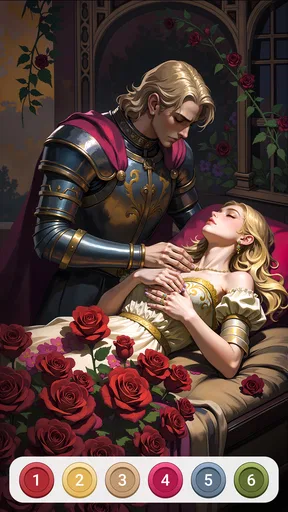
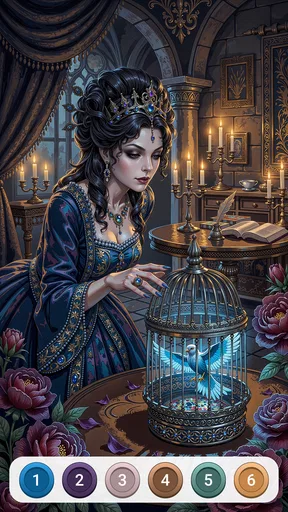
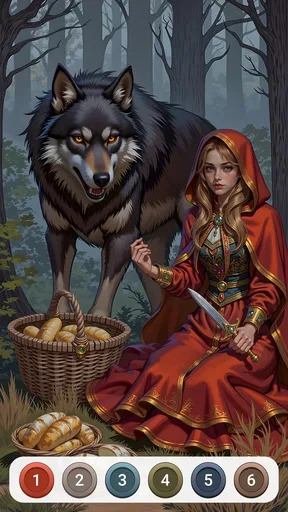
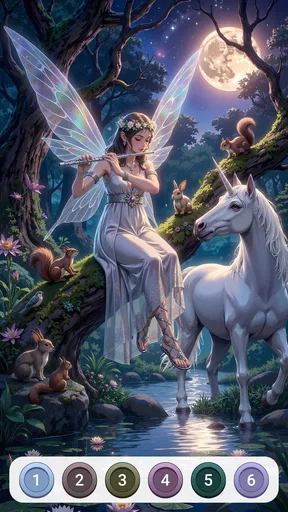
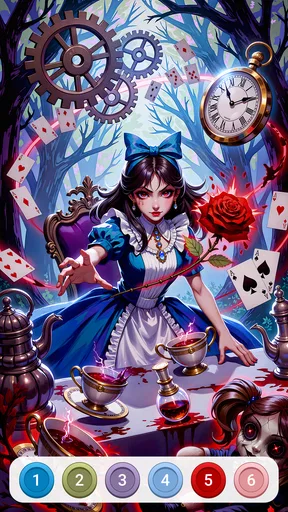
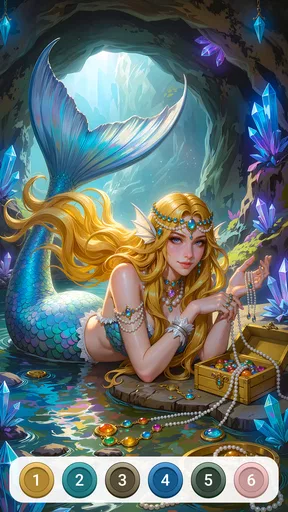
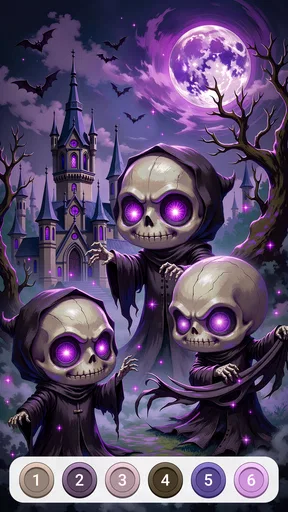
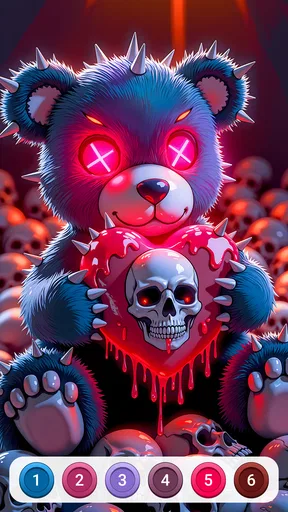
Our Review of Dark Fairytale Color by Number
 Analysis by Appyee
I opened Dark Fairytale Color by Number expecting a quiet coloring break, and that is exactly where this board game works best. Its appeal comes from the contrast between a familiar number-matching activity and a much moodier visual identity: instead of bright animals or cheerful landscapes, it leans into gothic, dreamy characters and fantasy artwork. I found it easy to understand within moments, but the darker presentation gives the experience more personality than a standard coloring book.
This is a free game from BrainArt Studio, rated for Everyone, and it belongs to the board category rather than action or puzzle gaming in the usual sense. It has reached over one hundred thousand installs and holds a 4.4 average from roughly a thousand ratings, which suggests that its simple format has found a receptive audience. I would describe it as a relaxed, screen-based coloring pastime first and a game second.
How the coloring experience feels in everyday use
The central routine is deliberately uncomplicated: choose an illustration, look for the numbered areas, and apply the matching color. That simplicity makes it suitable for short sessions when I want something gentle rather than competitive. I can imagine using it while winding down in the evening, during a commute, or between more demanding tasks when I want a clear activity with an obvious stopping point.
The dark fairytale theme is the main reason to choose this particular title over a generic color-by-number app. The artwork aims for an eerie, imaginative atmosphere, with characters and fantasy scenes that feel closer to illustrated folklore than to ordinary coloring sheets. That gives the completed pictures a stronger identity, although it also means the app will not suit someone looking for sunny scenery, realistic photographs, or purely abstract patterns.
I particularly like the way this format gives me a small sequence of achievable decisions. I do not need to plan a composition or understand drawing tools. I simply follow the numbers and watch the picture become more complete. For a beginner, that removes much of the intimidation associated with digital art. For an experienced artist, however, the same structure can feel restrictive because the color choices are guided rather than freely designed.
A useful way to approach it is to treat each image as a short decompression exercise rather than a creative project. I would not install it expecting to produce an original illustration. I would install it when I want the satisfaction of finishing something visual without having to learn brushes, layers, shading, or perspective. That distinction matters because the app’s value is in focus and atmosphere, not artistic control.
Where the free model fits
The game is free to download and use, while its listed in-app purchases range from $0.99 to $39.99 per item. That is the important spending context for anyone deciding whether it belongs on a family device or a personal phone. A free entry point makes trying the artwork easy, but the presence of purchases means I would still check the purchase settings before handing the device to a child.
I would not assume that every part of the experience is equally available without spending, and I would avoid making a purchase simply because I had already invested time in an image. That is a practical rule for any collection-based coloring game: enjoy the accessible material first, then decide whether additional artwork genuinely adds enough value. The available price range makes that decision worth making deliberately rather than tapping through quickly.
At the same time, the purchase information does not by itself prove that the game is unfair or overly aggressive. I found it more useful to separate two questions: can I enjoy the basic activity without paying, and do I personally want to pay for more content? Those are different judgments. The first concerns accessibility; the second concerns whether the artwork and continued use justify an optional expense.
Progress without the usual pressure
Color-by-number games create progress through completion rather than through combat, rankings, or difficult levels. That changes the emotional rhythm. I am not trying to beat another player or protect a streak. The reward is the gradual reveal of a dark fantasy illustration, which makes the game naturally suited to people who prefer calm repetition over fast reactions.
That calm structure can also become a limitation. If you need constant novelty, strategic depth, or a strong sense of challenge, the basic act of filling numbered spaces may not hold your attention for long. The theme adds atmosphere, but it does not turn the activity into a complex board strategy game. I would skip it if my main goal were competition, tactical planning, or a demanding puzzle.
One small habit improves the experience: I prefer to work through an image in clusters rather than hunt randomly for every instance of a number. I scan one area, complete the visible matches, and then move across the picture. This keeps the screen from feeling visually scattered and makes progress easier to notice. It also reduces the temptation to rush toward the final few spaces, which are often the least satisfying when approached as a chore.
Another practical tip is to use the game as a boundary around screen time. I can choose one illustration or one sitting, then stop when that personal target is reached. Because the activity has a clear visual endpoint, it is easier to turn a casual session into a controlled break than with an endless social feed. This is not a special feature claim; it is simply the way the format works best for me.
Fairness, spending, and personal expectations
There is no competitive scoreboard for me to worry about, so “fairness” here is mostly about whether spending changes access to the relaxing core of the game. In a noncompetitive coloring title, paid content does not create the same advantage problem found in multiplayer games. Nobody is losing a match because another player bought something. The more relevant concern is whether the free experience feels like a complete sample or merely a path toward purchases.
My recommendation is to judge the app by the images you can actually use before paying. If those pictures already deliver the atmosphere you wanted, the free version may be enough for occasional sessions. If you quickly want a larger selection, then the listed purchase range should be treated as a real budget decision, not as an incidental detail. I would set a spending limit in advance, especially on a shared device.
The game is rated Everyone, which makes its broad accessibility clear, but the gothic styling is still worth considering at home. “Everyone” describes the content rating; it does not mean every child will enjoy shadowy characters and darker fantasy imagery. I would let a younger player see the visual style first and decide whether it feels inviting or unsettling. Adults who enjoy fairytale gloom will probably find the presentation more appealing than families seeking bright, universally cheerful art.
The pressure level is also personal. Some people find completion systems soothing, while others feel pushed to finish every unfinished area. I usually avoid opening several pictures at once because that turns a relaxing activity into a list of incomplete tasks. Focusing on one illustration at a time makes the game feel more like coloring and less like collecting obligations.
How it compares with ordinary alternatives
Compared with a traditional coloring app, this game offers less freedom but a clearer path. I do not need to select a brush size, mix colors, or decide where shadows belong. That is excellent when I want low effort, but it is not ideal when I want to experiment. A freeform drawing app is better for creating something personal; this title is better for following a guided visual process.
Compared with a typical puzzle game, the challenge is softer and the result is more decorative. There is no need to calculate moves or learn a complicated ruleset. That makes it more approachable after a tiring day, although puzzle fans who enjoy solving a problem may find the number matching too passive. The board classification may help place it in an app store, but I would think of it more as a digital coloring pastime than as a strategic board game.
It also differs from bright, casual coloring collections through its tone. The gothic fairytale direction gives the pictures a recognizable mood, which is a genuine strength when that aesthetic matches your taste. The trade-off is narrower appeal. If I wanted landscapes, mandalas, cute pets, or realistic portraits, I would look elsewhere rather than hope this game changes its artistic identity.
For a child who wants to draw independently, I would choose a creative art app instead. For an adult who wants a few peaceful minutes and likes fantasy imagery, this is a more focused option. For two people looking to play together, it is probably not the right choice because the activity is centered on individual completion rather than shared turns or direct competition.
Questions I would consider before installing
Will it work on an older phone? The stated minimum requirement is Android 7.0, so it is not limited to only the newest Android devices. That makes it a reasonable candidate for an older spare phone, provided the device itself handles the app comfortably. I would still leave enough storage and keep the operating system updated where possible, but the minimum version is relatively approachable.
Is it genuinely free? The download is free, and purchases are available inside the game. I would begin without spending, see how much artwork and relaxation I get from the accessible experience, and only then consider an optional purchase. The listed items span from $0.99 to $39.99 each, so the upper end is significant enough to deserve a deliberate decision.
Is it suitable for children? Its Everyone rating supports broad age accessibility, but I would still consider the dark visual theme and supervise purchases on a shared device. The number-based interaction itself is easy to grasp, making it approachable for younger users who enjoy coloring, while the gothic presentation may appeal more strongly to older children and adults.
Does it require artistic skill? No artistic training is needed. The numbered structure tells me what to do, so the game is welcoming when I cannot draw or simply do not want to make creative decisions. The trade-off is that the finished result reflects the prepared design rather than my own color theory or brushwork.
How long will it stay interesting? That depends almost entirely on how much I enjoy the theme and repetition. Someone who likes completing fantasy illustrations may return often, while someone who needs changing mechanics may lose interest quickly. I would treat it as a focused relaxation tool, not as a single game intended to provide deep progression for months.
What I would like to know before spending
The current version is 1.1.4, and the game was released on June 19, 2025. Those details place it among relatively recent options, but they do not tell me how its content will develop over time. I would therefore avoid buying a large amount of content on the assumption of a particular future roadmap. I would pay only for what already appeals to me now.
The same cautious approach applies to long-term value. A dark fantasy coloring game can be very satisfying if the artwork itself is the reason I return. If I am motivated mainly by unlocking everything, spending can become less rewarding because completion replaces relaxation. I get better value when I choose individual pictures I genuinely want to finish rather than treating the whole catalog as a collection that must be owned.
That is also why I would not compare its purchase model directly with a premium one-time coloring app without checking what each product offers. A paid alternative may suit someone who wants a predictable upfront cost and no temptation to keep buying. This free title suits someone who prefers to sample the style first and decide gradually, as long as that flexibility does not encourage impulsive spending.
My verdict on this dark coloring break
Dark Fairytale Color by Number is an easy recommendation for a specific kind of player: someone who likes gothic fantasy art, wants a calm activity, and enjoys the satisfaction of completing guided illustrations. BrainArt Studio has chosen a clear identity rather than trying to appeal to every coloring preference, and that focus is the game’s strongest quality.
I appreciate that the format is approachable, works as a short everyday escape, and does not demand artistic ability. I also appreciate that it avoids the fairness concerns associated with paid advantages in competitive games. Still, the free-to-purchase structure deserves attention, and the price range reaching $39.99 per item means I would keep spending controlled. The game is most enjoyable when purchases remain optional rather than becoming the reason to continue.
My final advice is simple: install it if the dark fairytale look immediately appeals to you, try the available experience without rushing to buy, and decide based on whether the act of coloring itself feels relaxing. Skip it if you want open-ended drawing, multiplayer competition, bright general-purpose artwork, or complex board-game strategy. For me, it works best as a quiet, atmospheric coloring companion—pleasant, focused, and worth trying, provided I keep my expectations and spending sensible.
Verdict
Strengths of Dark Fairytale Color by Number
- Relaxing color-by-number gameplay suitable for short sessions.
- Fairytale artwork offers a charming alternative to ordinary coloring books.
- Simple controls make it accessible for beginners and casual players.
- Completed pictures can provide a satisfying sense of progress.
- Useful for creative downtime without requiring advanced artistic skills.
Limitations of Dark Fairytale Color by Number
- Some detailed designs may feel slow to complete on a small screen.
- Repeated tapping can become tedious during longer coloring sessions.
- Hints or extra tools may be limited unless you watch ads or pay.
- The dark fairytale theme may not appeal to users seeking cheerful artwork.
- Progress can feel repetitive once the basic coloring mechanics are mastered.
Other Releases by BrainArt Studio
View All
Dark Night Paint by Numbers
Board4.6

Wild Color - Paint by Number
Board4.7

Magic Fantasy Paint by Numbers
Board4.8

Nature Calm Paint by Numbers
Board4.8
Similar Picks in This Category
View All
Ludo King®
Gametion4.1

Ludo
Yarsa Games4.6

Tile Master® - Matching Game
Higgs Studio3.6

Checkers Online
CC Games4.6

Dominoes
Loop Games4.7

Chess
Chess Prince4.6
Frequently Asked Questions
What is Dark Fairytale Color by Number?
Dark Fairytale Color by Number is a relaxing digital coloring game built around gothic, fantasy, and mysterious fairytale artwork. Instead of choosing colors freely, you complete illustrations by matching numbered sections with the correct shades. The pictures typically feature enchanted characters, magical creatures, castles, and darker storybook scenes, making the app appealing to users who enjoy creative activities with a dramatic visual style.
How does the coloring system work in Dark Fairytale Color by Number?
Each illustration is divided into small numbered areas, and every number corresponds to a specific color in the palette. You select a color and tap the matching sections to fill them in. The game is easy to understand, although detailed images can require patience because some areas are very small. Helpful tools and hints may assist when you have difficulty locating the final uncolored sections.
Is Dark Fairytale Color by Number suitable for beginners?
Yes, the game is generally suitable for beginners because it does not require drawing experience or advanced artistic skills. The numbered format guides you through every image, allowing you to focus on finding the correct spaces rather than deciding how to create the artwork. However, some complex illustrations may take time, so younger players or users who prefer very quick sessions may need patience.
Can Dark Fairytale Color by Number be played offline?
Some previously downloaded coloring pages may be available without an internet connection, which is useful during travel or when mobile data is limited. Nevertheless, online access may still be required for downloading new artwork, receiving updates, viewing advertisements, or using certain optional features. Availability can also depend on the current version of the app and the device platform, so checking its store description is recommended.
Does Dark Fairytale Color by Number contain ads or in-app purchases?
The game may use advertising and optional in-app purchases as part of its free-to-download model. Advertisements can appear between activities or when you request extra hints, while purchases may provide additional artwork, remove ads, or unlock helpful tools. Before downloading, review the current Google Play or App Store listing and check the purchase settings, especially if children will be using the application.
Play our best games!


